
Iran Seeks US Negotiations but Rejects Pressure as Qatar Continues Mediation
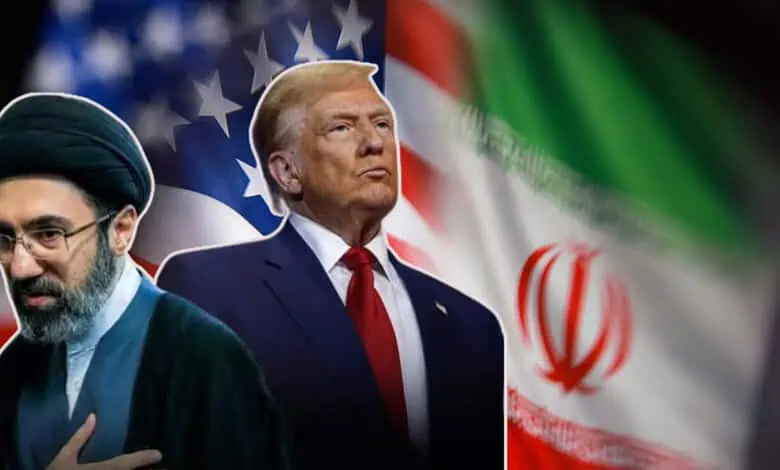
Iranian President Masoud Pezeshkian said on Monday, November 9, that Iran was willing to negotiate with the United States to end the prolonged state of “neither war nor peace” between the two countries but would not accept pressure or coercion.
In 30 seconds
- Speaking at a ceremony marking the 72nd anniversary of Iran Dairy Industries Company, Pezeshkian said Supreme Leader Mojtaba Khamenei had directed officials to work towards resolving the current stalemate.
- “We can negotiate with dignity and resolve the issue with dignity.
- Pezeshkian argued that diplomatic engagement should take priority over military confrontation when a country's rights and interests could be protected through negotiations.
Speaking at a ceremony marking the 72nd anniversary of Iran Dairy Industries Company, Pezeshkian said Supreme Leader Mojtaba Khamenei had directed officials to work towards resolving the current stalemate.
“We can negotiate with dignity and resolve the issue with dignity. We favour dialogue and negotiations,” he said, according to a statement published on the Iranian presidency's website.
Pezeshkian argued that diplomatic engagement should take priority over military confrontation when a country's rights and interests could be protected through negotiations. However, he maintained that Tehran would not surrender to pressure.
Referring to his address at the United Nations General Assembly, the Iranian president said any negotiations must be based on justice and equal conditions while protecting Iran's national interests.
He also called for stronger domestic production and energy conservation, saying these measures were important for improving the country's economic resilience and independence.
Diplomatic efforts between Washington and Tehran are continuing through regional mediators, including Qatar and Pakistan.
A senior Qatari official told Al Jazeera that discussions between the two sides were ongoing. The official also rejected reports in Israeli media claiming to reveal details of a possible agreement, including arrangements involving uranium enrichment, frozen Iranian assets and mediation efforts in Yemen.
The official described those reports as false and urged media organisations and the public to rely on verified information from official sources.
Qatar's Foreign Ministry had also confirmed on November 3 that it was facilitating the exchange of proposals between Washington and Tehran, with both sides reviewing possible ways to bridge their differences. <Cite refs={["turn263882search1","turn263882search0"]}/>
Iranian Foreign Ministry spokesperson Esmaeil Baghaei said Tehran's proposal to move negotiations forward within two days remained on the table.
He said progress depended on Washington agreeing to several conditions, including an end to hostilities, the lifting of the naval blockade and the removal of sanctions.
Baghaei said meeting these demands could help improve regional stability and restore security in the Strait of Hormuz. He also acknowledged the mediation efforts of Qatar and Pakistan and confirmed that communication with both countries was continuing.
Iran has previously conveyed proposals through Qatar, seeking changes to sanctions and restrictions as part of a broader arrangement to end the conflict. However, the United States has expressed objections to Tehran's conditions, and a breakthrough has not yet emerged. <Cite refs={["turn263882news22","turn263882news23"]}/>
On the nuclear issue, Baghaei ruled out transferring Iran's stockpile of enriched uranium to another country, saying Tehran saw no reason to agree to such an arrangement.
He also questioned whether the International Atomic Energy Agency could properly inspect nuclear facilities damaged during the conflict under the current circumstances.
The nuclear programme remains a major point of disagreement between Iran and the United States, alongside sanctions, the naval blockade and security arrangements in the Strait of Hormuz.
Although diplomatic contacts are continuing, the two countries have yet to reach an agreement on the conditions required to move towards a lasting settlement.
TTV News follows a published editorial policy. Spotted an error? Request a correction.
Related
11 Nations Begin Military Exercise in Poland to Prepare for Ukraine’s Post-War Security
Warsaw: The UK- and France-led Coalition of the Willing has begun its first major multinational military exercise in Poland, bringing toget…

Krakow Shooting: Six Killed, 15 Injured in Attack at Poland’s Main Square
Krakow, Poland: Six people were killed and at least 15 others injured after a gunman opened fire in the busy Main Market Square in Krakow o…

Paraguay Impeaches President Santiago Peña After Ueno Bank Collapse, Pedro Alliana Takes Over
Asunción: Paraguay has entered a major political and financial crisis following the collapse of digital lender Ueno Bank, which disrupted b…