
Jamia Students’ Union Revival Renews Debate Over Campus Democracy and Student Representation
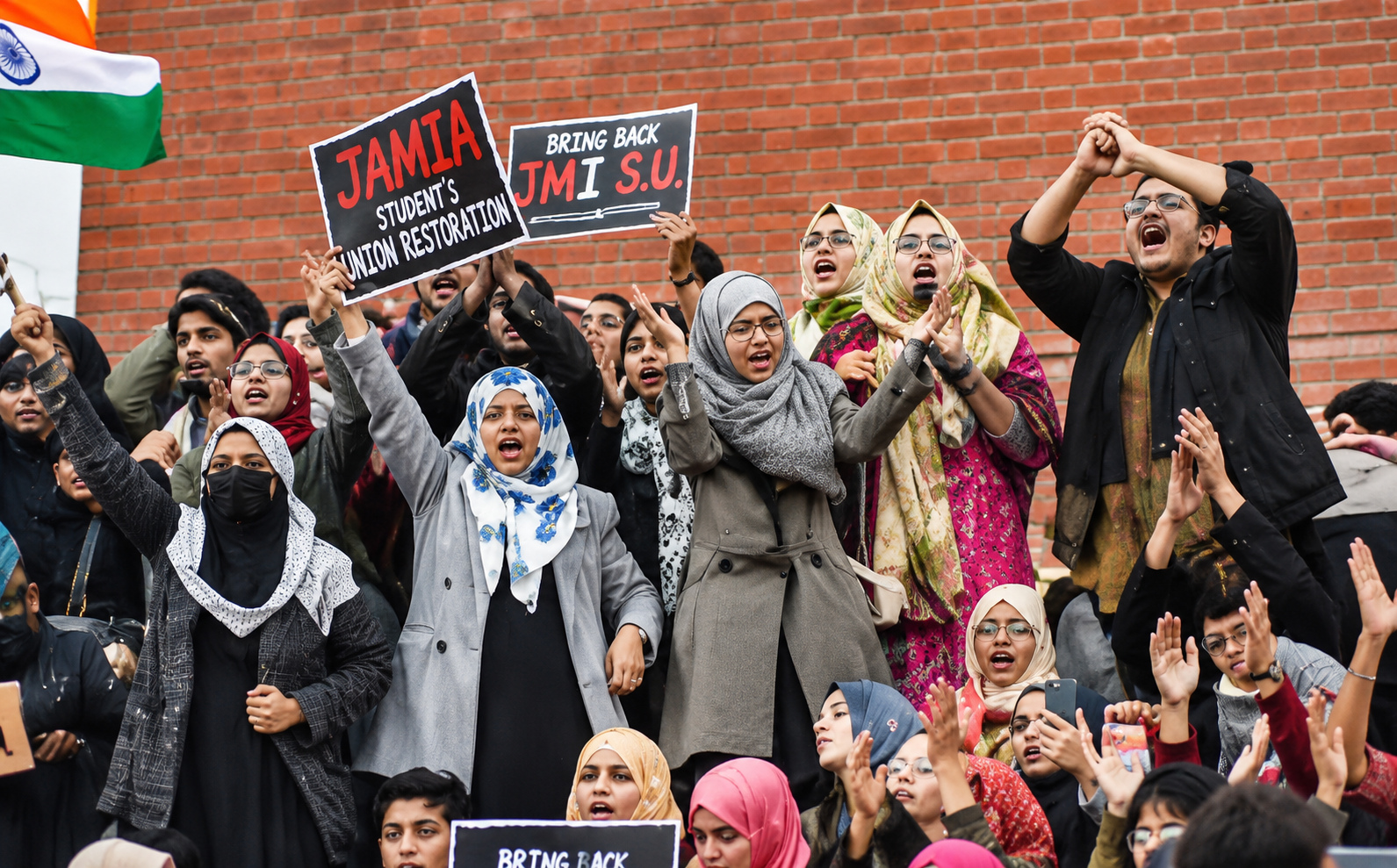
The decision by Jamia Millia Islamia (JMI) to restore its students’ union has renewed the debate over campus democracy, student representation and the role of universities in preparing young people for public life.
In 30 seconds
- The decision by Jamia Millia Islamia (JMI) to restore its students’ union has renewed the debate over campus democracy, student representation and the role of universities in preparing young people for public life.
- The announcement came on Wednesday, October 28, after an 18-day student agitation that included a hunger strike by five students.
- Under the announced schedule, the university has set May 15, 2027, as the deadline for approving and implementing the union constitution.
The announcement came on Wednesday, October 28, after an 18-day student agitation that included a hunger strike by five students. Following the protest, the university administration agreed to a timeline for restoring the students’ union, which has remained inactive since 2006.
Under the announced schedule, the university has set May 15, 2027, as the deadline for approving and implementing the union constitution. Elections are expected to take place within six weeks of the start of the next academic session.
The development comes as Karnataka has also issued an order to revive campus elections after a gap of 37 years.
The revival of student unions has brought attention to the importance of democratic participation within higher education institutions.
Student unions provide an organised platform for students to raise concerns about fees, accommodation, scholarships, campus facilities and academic regulations. Elected representatives can also engage with university administrations and communicate the collective concerns of students.
Supporters of campus elections argue that these platforms help young people understand democratic processes through practical experience. They provide opportunities to debate different viewpoints, represent fellow students, negotiate with authorities and learn the responsibilities associated with leadership.
The absence of elected student bodies, critics argue, can leave students with limited influence over decisions that directly affect their academic and campus lives.
University administrations have often raised concerns about violence, political interference and disruption associated with student elections.
Incidents involving clashes between rival student groups, along with the influence of external political organisations, have contributed to resistance against restoring campus elections in some institutions.
However, advocates of student representation argue that these concerns should be addressed through effective regulations rather than by permanently suspending elections.
The Lyngdoh Committee, established in 2005 following directions from the Supreme Court, recommended safeguards for student elections. Its proposals include eligibility requirements, restrictions on election expenditure, measures against criminalisation and mechanisms for resolving electoral disputes.
Proper implementation of these safeguards is considered important for ensuring that campus elections remain fair and do not disrupt academic activities.
The return of elections also raises questions about the representation of women and students from disadvantaged backgrounds.
Elections alone may not guarantee equal participation, as financial resources, social inequalities and political influence can affect who contests and whose concerns receive attention.
Student unions are therefore expected to maintain transparent decision-making, disclose expenditure and ensure that elected representatives remain accountable to the students they serve.
Karnataka's decision to reserve positions for women in student unions has also brought attention to the need for broader representation within campus bodies.
The debate extends beyond campus administration to the broader purpose of higher education.
While universities play an important role in preparing students for employment, advocates of campus democracy argue that education should also encourage critical thinking, public awareness and the ability to question authority.
Student unions, debates and discussion forums can provide opportunities for students to engage with public issues and understand different perspectives.
The growing influence of social media has added another dimension to this discussion. Universities are increasingly expected to provide spaces where information can be examined, evidence can be questioned and disagreements can be discussed constructively.
Jamia's decision is now expected to be judged by whether the administration follows the announced timeline and completes the process of restoring the union.
Similarly, Karnataka's order will need to translate into functioning student bodies across the institutions covered by the decision.
The developments have renewed calls for other universities and state governments to reconsider restrictions on campus elections.
Although student politics can present challenges, supporters maintain that transparent rules, faculty guidance and effective monitoring can help address concerns without denying students the opportunity to elect their representatives.
The larger question is whether universities should focus only on producing job-ready graduates or also create informed citizens capable of participating in democratic society. The revival of campus elections has brought that question back into focus.
TTV News follows a published editorial policy. Spotted an error? Request a correction.
Related

West Bengal: Rape-Murder Accused Killed in Police Encounter, CM Defends Firing
Kolkata: A man accused of raping and murdering a 12-year-old girl was killed in an exchange of fire with police near Raiganj in West Bengal…

BJP MLA Papia Adhikary Apologises, Withdraws Remark on Firecrackers Curing Diseases
Kolkata: West Bengal BJP MLA Papia Adhikary has apologised and withdrawn her controversial remarks suggesting that bursting firecrackers co…

Ethanol-Free Petrol at Rs 169 a Litre Draws Customers in Bengaluru
Bengaluru: Ethanol-free premium petrol, marketed as Speed 100, is attracting customers at select petrol stations in Bengaluru amid growing…