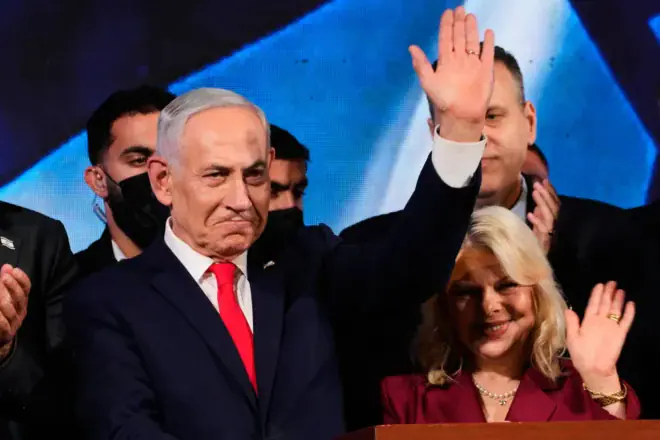
Tel Aviv: Israeli Prime Minister Benjamin Netanyahu has intensified allegations of election fraud involving Arab-led political parties, calling for an investigation into suspected foreign interference and alleged voter bribery following an inconclusive parliamentary election.
In a social media post on Thursday, October 29, Netanyahu described the controversy as an “earthquake” and claimed that the election had been stolen. He targeted Ra’am, also known as the United Arab List, and the Joint List alliance.
Netanyahu's allegations followed a move by Central Elections Committee chief Justice Noam Sohlberg to seek an investigation by Shin Bet, Israel's internal security agency, into suspicions of improper foreign influence and funding connected to the election.
The allegations have not been established, and police have said there is no supporting evidence for Likud's broader claim that Arab-led parties stole the election.
Central Elections Committee Seeks Shin Bet Investigation
Sohlberg wrote to Shin Bet chief David Zini requesting an investigation into suspicions that foreign entities may have attempted to influence the election through funding allegedly directed at organisations involved in political mobilisation.
In his letter, Sohlberg said he could not verify the substance of the suspicions but considered a thorough investigation necessary. He requested that the findings be submitted within a week.
The letter did not identify the countries allegedly involved or provide detailed evidence of the suspected interference.
Hebrew-language media reports said Netanyahu's Likud party suspected that Qatar and Turkiye could have been sources of funds allegedly sent to organisations involved in mobilising Arab voters. These claims remain allegations.
Netanyahu Accuses Arab-Led Parties of Electoral Offences
Netanyahu has alleged that Arab-led parties were involved in voter bribery, threats, violence, multiple voting and other electoral offences. He said Likud was submitting hundreds of testimonies and pieces of evidence to the authorities.
He also claimed that the alleged interference was intended to influence the composition of the Knesset and undermine his political bloc.
Netanyahu urged police and Shin Bet to use available investigative measures to examine the allegations. He also called on parties supporting Zionism not to cooperate with Ra’am or the Joint List.
Police, however, have rejected the broader assertion that the election was stolen, saying there was no supporting evidence for that claim.
Inconclusive Election Leaves Parliament Without a Majority
The election has left no clear majority in Israel's 120-member Knesset, according to the partial count cited in the report.
Netanyahu's bloc was projected to secure 53 seats, while the opposition camp led by former military chief Gadi Eisenkot had 48. Arab-led parties were projected to win 19 seats. A majority requires at least 61 seats.
The figures are provisional and should not be treated as final results.
Arab-led parties primarily represent Palestinian citizens of Israel, who account for approximately one-fifth of the country's population. Ra’am, led by Mansour Abbas, and the Joint List could play a significant role in negotiations over the formation of a government.
Eisenkot said Israel must protect the integrity of its elections and investigate complaints thoroughly. He also cautioned against using the allegations for political purposes, including attempts to influence the timing of the next parliament's inauguration.
Opposition Options and Government Formation
The opposition camp and Arab-led parties together could potentially support an alternative government based on the reported seat count, although disagreements remain over whether Arab parties should join a coalition or provide support from outside it.
Ra’am previously joined the coalition formed in 2021 under then-prime minister Naftali Bennett and Yair Lapid. That government collapsed in 2022, leading to another election.
The Central Elections Committee was expected to publish the final results by November 4, according to the report. President Isaac Herzog would then consult political factions before assigning a lawmaker the task of forming a government.
The outcome of the investigation and the final election results are expected to be important factors in the next stage of Israel's government-formation process.