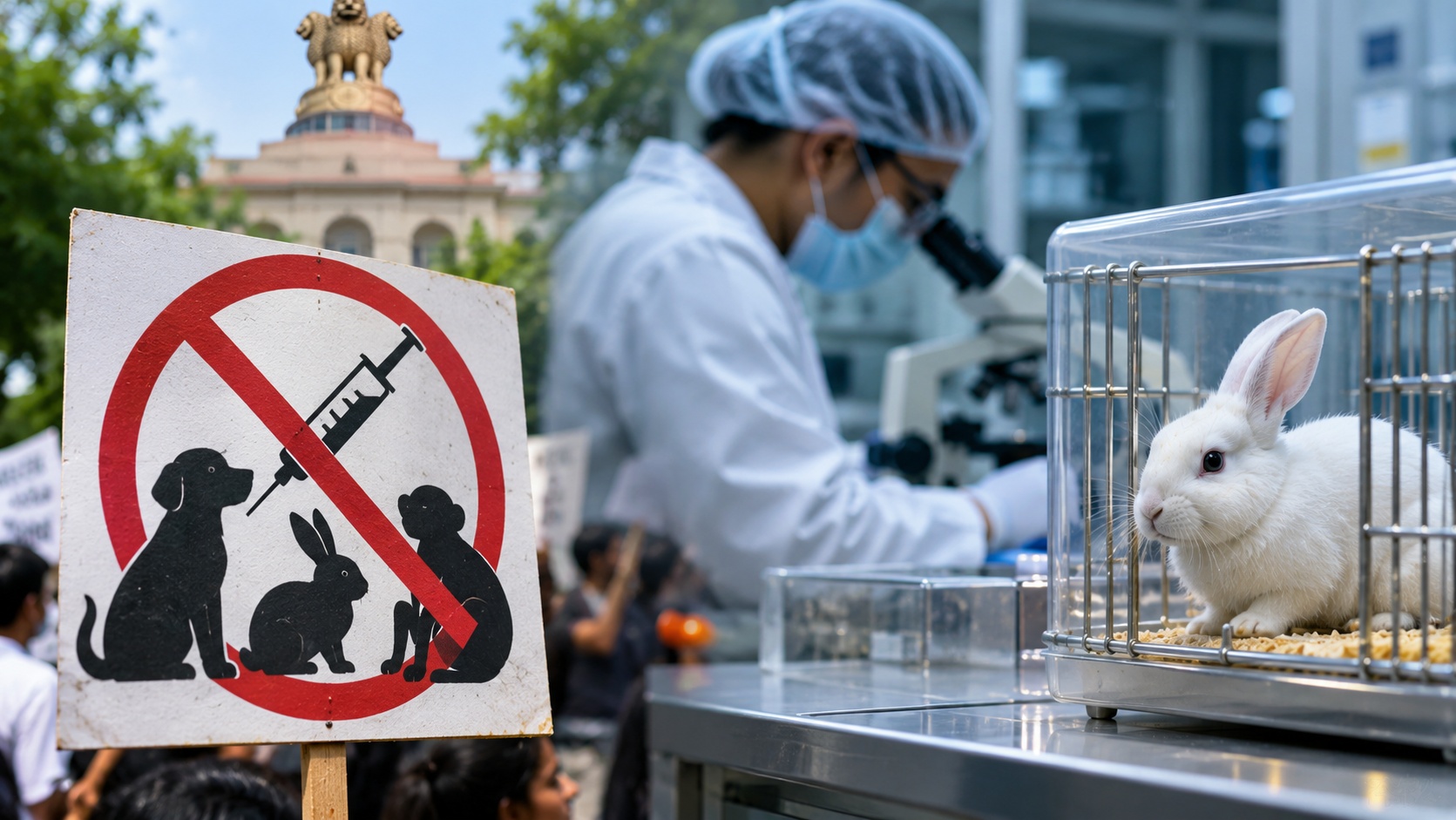
Opposition is growing across India against the draft Prevention of Cruelty to Animals (Control and Supervision of Experiment, Breeding and Trading of Laboratory Animals) Rules, 2026, with scientists, veterinarians, lawmakers and more than 60 animal welfare organisations demanding its complete withdrawal.
The draft, released by the Department of Animal Husbandry and Dairying (DAHD) under the Union Ministry of Fisheries, Animal Husbandry and Dairying, has triggered concerns over proposed changes to the regulation of animal experimentation in laboratories.
Critics argue that several provisions could weaken safeguards for animals and reduce independent monitoring of research facilities.
Concerns over use of wildlife and stray animals
One of the major objections concerns Draft Rule 5, which reportedly introduces provisions allowing protected wildlife, wild-caught animals and stray or feral community dogs and cats to be used in laboratory experiments under specified circumstances.
Animal welfare organisations warn that these provisions could expose vulnerable animals to confinement, invasive procedures and unnecessary distress.
They have called for stronger protections to prevent the capture and use of animals that are not ordinarily part of laboratory research programmes.
Proposed changes to CCSEA oversight
Another major point of disagreement relates to Draft Rule 11 and the proposed changes to the Committee for Control and Supervision of Experiments on Animals (CCSEA).
Opposing organisations argue that allowing institutions to approve animal experiments internally could reduce independent scrutiny and weaken existing checks and balances.
They maintain that decisions involving animal experimentation should remain subject to effective external oversight rather than being left primarily to the institutions conducting the research.
Advance notice for inspections opposed
Animal protection groups have also raised objections to a proposed requirement for inspection teams to inform laboratories before visiting their facilities.
According to critics, advance notification could make it difficult for inspectors to identify violations and assess actual laboratory conditions.
They argue that unannounced inspections are important for ensuring compliance with animal welfare standards.
Calls for stronger animal welfare safeguards
The organisations opposing the draft have also highlighted what they describe as gaps in safeguards governing laboratory procedures.
Their concerns include the need for clear requirements on anaesthesia, restrictions on the use of paralysing agents, humane euthanasia practices and rehabilitation after experiments.
They have called for strict controls or prohibitions on procedures involving severe and avoidable suffering, including electric shocks, forced toxicity testing where death is the endpoint and induced tumour experiments.
Demand for complete withdrawal
The opposition brings together animal welfare organisations, scientific professionals, veterinarians and lawmakers from different political parties.
They are seeking the complete withdrawal of the draft in its present form, arguing that any revision of laboratory animal regulations must strengthen independent supervision, scientific accountability and humane treatment.
The debate has brought renewed attention to the need to balance scientific research with enforceable animal protection standards.