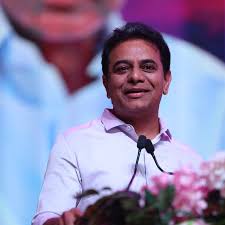

Actor and activist Prakash Raj said on Thursday that censorship in India had taken on an entirely different form, one that no longer relies on outright bans but instead operates through a climate of fear in which writers and filmmakers stop themselves.
"They have instilled a deep fear in everyone, pushing people into a constant state of anxiety," he said, adding that the instruments of this fear could be film certification, demonetisation, the mob, or something else altogether.
Raj was speaking at Lamakaan in Hyderabad at the launch of the Telugu translation of 'The Book of Disappearance,' the novel by Palestinian writer and journalist Ibtisam Azem, translated by K Satyarajan.
A process is a punishment
There had always been somebody to silence a questioning voice, he said. In 'Jana Nayagan,' a film he acted in alongside actor and Tamil Nadu Chief Minister C Joseph Vijay, a line referred to a 'Project Om.' The censor board, he said, would not permit him to pronounce the word, insisting instead that he say the English letters 'OM.' In another film, playing a lawyer, he had a line about a character named Saraswati who was subjected to sexual violence. "They told me, 'No, no, Prakash Raj garu, you shouldn't say Saraswati was subjected to sexual violence. Call her L Saraswati,'" he said.
The real damage, he argued, falls on those who have not yet begun. "A young writer or a director will start thinking while writing the story itself. If I write this, it won't get past the censors, it won't release and no producer will back it."
He said he had warned the film industry when regional certification was centralised several years ago. "I told them, you won't understand this conspiracy now, but it's a massive one. Today, everyone understands."
Raj said the judicial process was being turned to similar ends, naming Stan Swamy, GN Saibaba and Umar Khalid. He pointed to a book by Justice Nagamohan Das, which he had released recently, on how dictators and fascists convert the judicial process itself into a punishment. "A judicial process is meant to punish the guilty. But how do you use that same process to punish the innocent? Legally, they appear right. But morally, are they right? This is another form of censorship," he said.
A bloodless genocide
The Constitution had held the line where neighbouring countries had not, he said. "Because of our Constitution, the military cannot take over here. So how do they take over this country? They use the institutions."
Citing a formulation he attributed to economist and commentator Parakala Prabhakar, Raj described the mass deletion of voters from electoral rolls as "a bloodless genocide." "A massacre without bloodshed is happening. They have silently deleted nearly 12 crore voters," he said.
He said the exercise would continue until February, after which the Census would follow. "There is a grand design to it all. Eventually, the Election Commission offices in the states will be reduced to small, powerless rooms. They hold all the data. They will use it to track who is having inter-caste marriages, who belongs to which community, and who should be reduced to a secondary citizen."
He said Adivasis, Dalits, Muslims and Christians were being actively reduced to secondary citizens.
A novel about vanishing Palestinians
First published in Arabic in 2014 as 'Sifr al-Ikhtifaa,' the novel is set in Jaffa and Tel Aviv and turns on a single speculative premise: one morning, every Palestinian in the land has vanished. It alternates between the notebooks left behind by Alaa, a young Palestinian man, and Ariel, his Israeli neighbour, a liberal Zionist who reads them while searching for an explanation. Sinan Antoon's English translation was longlisted for the International Booker Prize in 2025.
Poetry, a deer and the Reel King
Raj, among the more visible voices in Indian cinema on the subject of Palestine, answered the familiar question about why an actor speaks politics by quoting Palestinian poet Mahmoud Darwish, as he had done at a solidarity rally in Chennai last September. Asked the same question, Darwish had replied that if his poetry were to be free of politics, he would first have to be able to hear birdsong, "and for that, the warplanes would have to fall silent."
"Usually, we only know the tears we shed for the wounds on our own bodies. But if another human being suffers far away in Gaza, or far away in Manipur, we must invite those tears of pain into our own eyes," Raj said.
He closed with a story about a deer that spots a tiger crouched in a bush and, rather than fleeing, steps forward and calls out, not to warn the herd, but to tell the predator it had been seen.
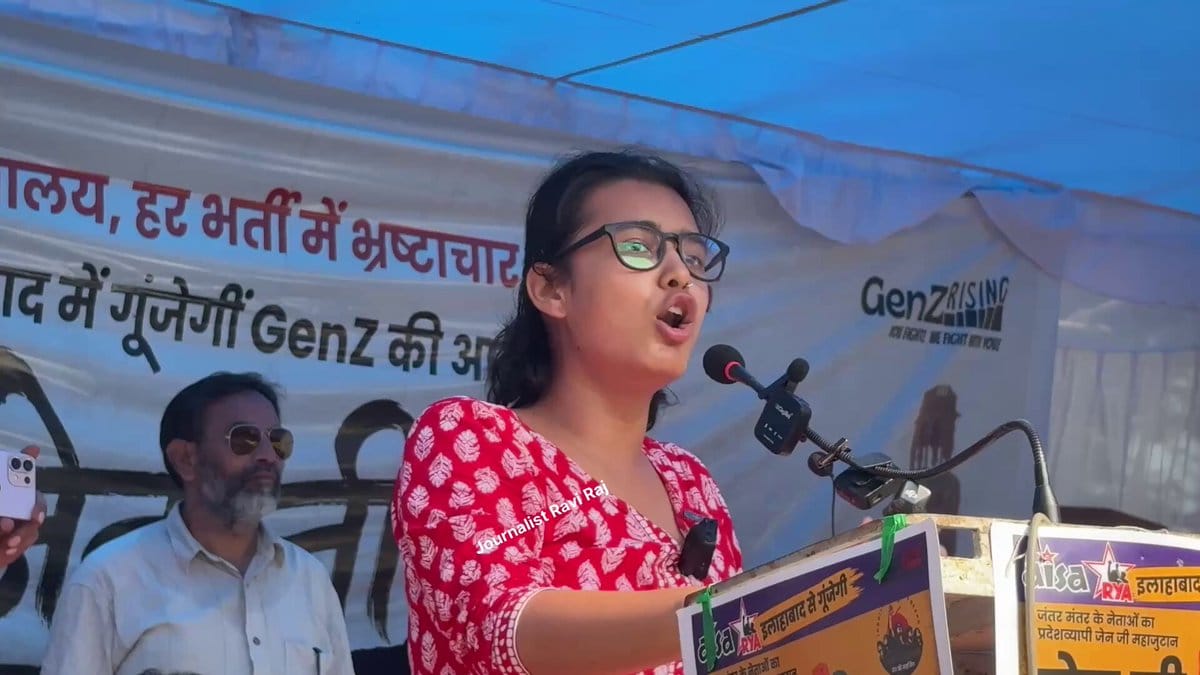
In an apparent reference to Prime Minister Narendra Modi, Raj said, "Our Mahaprabhu is scared. The kids have scared him," referring to the protests at Jantar Mantar against the NEET paper leak, which led to the resignation of then Union Education Minister Dharmendra Pradhan. "He took two steps back, didn't he? Let us take a step forward. Now the poor man is making reels. Reel King," Raj said.
Asked on his own sets why he cannot simply adapt and compromise, he said his reply is always the same: "Deceased fish are enough to float along with the stream. But a fish must be alive to swim against the current."