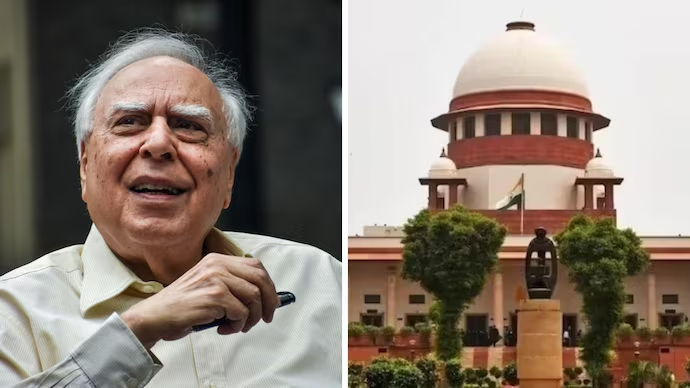
New Delhi: The Supreme Court on Sunday said it was determined to restore senior advocate Kapil Sibal’s faith in the institution after he expressed frustration over repeatedly approaching the court over alleged electoral-roll irregularities.
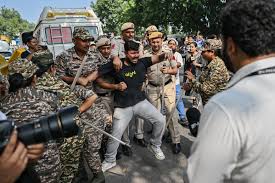
The remarks were made during a special hearing on restrictions imposed by Delhi Police ahead of a protest at Jantar Mantar on Saturday. Demonstrators associated with the Cockroach Janta Party (CJP) had demanded the resignation of Chief Election Commissioner Gyanesh Kumar, alleging irregularities in the Special Intensive Revision (SIR) of electoral rolls.
Responding to Sibal’s comments, the bench said it wanted to restore his confidence in the judiciary, acknowledging his longstanding faith in the institution.
Sibal Expresses Frustration Over Repeated Court Appeals
Speaking at a press conference on Saturday, Sibal, a Rajya Sabha member, said he was tired of repeatedly approaching the Supreme Court over concerns surrounding the electoral process. He clarified that his comments reflected his personal views and were not about personal satisfaction with the Chief Justice of India.
Sibal said lawyers had a responsibility to defend people’s rights and questioned whether peaceful demonstrations should be restricted through prohibitory orders under Section 163 of the Bharatiya Nagarik Suraksha Sanhita (BNSS).
He also questioned the reported detention of people travelling to Delhi by train or air before they could reach the protest venue. He sought clarity on the legal basis for such action and the whereabouts of those detained.
Concerns Over Barricades and Security Deployment
Sibal criticised the scale of the security arrangements in Delhi, referring to the deployment of 28 battalions alongside Central Armed Police Forces personnel and Delhi Police officers.
Alleging that protesters had been manhandled and transported away in buses, he questioned how long extensive restrictions on movement could continue.
During Sunday’s hearing, the Supreme Court issued directions concerning the removal of barricades to facilitate movement, subject to public-order and traffic requirements. It also called for normal Metro and internet services in accordance with the law and stressed that lawyers must be allowed to perform their professional duties without obstruction.
The court’s observations came amid petitions challenging police action during the demonstrations, including allegations of illegal detentions and restrictions on transport services.
Sibal Raises Alleged Interception of Lawyers
Sibal also described an incident involving Ratna Singh, head of the CJP legal team, and lawyers Tara Narula and Shubhangini Sharma.
According to Sibal, the three were travelling from Jangpura to the Supreme Court when two vehicles allegedly blocked their car. One of the individuals involved reportedly claimed to be associated with the Intelligence Bureau.
Sibal said the lawyers remained inside their vehicle and that Narula contacted him about the incident.
He further stated that an application seeking registration of a First Information Report (FIR) against those who allegedly intercepted them was filed before a magistrate on Saturday morning. The question of territorial jurisdiction was raised, and the order was reserved. Sibal said the order had not been pronounced by the time of his press conference.
These claims were presented by Sibal; further details about the alleged interception and the status of the application were not provided in the account.
Protest Restrictions Remain Under Scrutiny
Sibal also alleged that disruptions to train services and internet restrictions made it difficult for people to coordinate and remain in contact during the protests.
The demonstrations centred on demands for Kumar’s resignation over alleged irregularities in voter lists. Sibal argued that protests could take different forms and questioned the detention and transportation of demonstrators away from protest locations.
The Supreme Court’s Sunday hearing addressed concerns over movement restrictions, transport services and the treatment of peaceful protesters. The allegations surrounding police action and electoral-roll irregularities remain matters of legal and public dispute.