
US-Iran Tensions Escalate Ahead of Midterms, Raising Fresh Concerns for India’s Energy Security
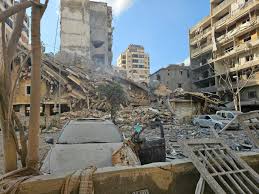
The conflict involving the United States, Israel and Iran has entered another uncertain phase, with renewed military action raising concerns about a wider regional war and its consequences for the global economy.
In 30 seconds
- The conflict involving the United States, Israel and Iran has entered another uncertain phase, with renewed military action raising concerns about a wider regional war and its consequences for the global economy.
- The timing is significant, as the United States is holding its midterm elections on Tuesday, November 3.
- The central question remains whether the US has a clearly defined strategy for ending the conflict.
The timing is significant, as the United States is holding its midterm elections on Tuesday, November 3. Washington faces a difficult choice between intensifying military pressure on Tehran and pursuing negotiations to prevent another major escalation.
The central question remains whether the US has a clearly defined strategy for ending the conflict. Its possible objectives include weakening Iran's military capabilities, restricting its nuclear programme, forcing political change or reaching a negotiated settlement. Each would require a different approach, and military strikes alone may not deliver all these outcomes.
The US has been maintaining military pressure on Iran while diplomatic efforts continue through regional mediators, including Qatar.
Negotiations have faced major differences over the sequence of concessions. Washington wants Iran's nuclear programme addressed, while Tehran has sought relief from the US naval blockade, access to frozen financial assets and the ability to resume oil exports.
Trust remains a major obstacle. Iran has reasons to be cautious about negotiations after previous rounds of diplomacy were followed by military action.
The latest developments have further complicated the situation. US forces carried out strikes on Iranian targets near the Strait of Hormuz on November 3, according to US officials cited by the Associated Press. Diplomatic efforts, however, are continuing, with mediators working on a possible arrangement involving shipping security and the US blockade.
The US and Israel possess significant advantages in air power and naval capabilities. However, the conflict has highlighted the difference between inflicting military damage and achieving long-term strategic objectives.
Changing Iran's political leadership through military pressure would be a difficult undertaking. The absence of a unified opposition and the strength of the country's security institutions make regime change uncertain. A prolonged ground campaign would also carry considerable military and political risks.
Military strikes may damage nuclear facilities, but they cannot automatically eliminate scientific expertise, technical knowledge or the political decision to pursue nuclear capabilities.
The exact status of Iran's nuclear programme and its remaining enriched uranium stockpile remains a key issue in negotiations. Any lasting agreement would require arrangements for verification and monitoring.
The conflict has demonstrated that Iran retains the ability to threaten regional targets through missiles and drones. Even after suffering military losses, its underground facilities, stored components and domestic manufacturing capacity could complicate efforts to eliminate its missile programme entirely.
One of the most significant consequences of the conflict has been the importance of the Strait of Hormuz.
The narrow waterway is a major route for global oil and gas shipments. Disruption to commercial traffic has given Iran considerable leverage, while increasing the cost and complexity of protecting shipping in the region.
The situation has also exposed the risks faced by Gulf countries that depend on the uninterrupted movement of energy exports. A prolonged confrontation could affect shipping insurance, transport costs and global energy prices.
India is particularly vulnerable to a prolonged crisis because of its dependence on imported crude oil. Higher international prices could increase the country's import bill, add to inflationary pressures and weaken the rupee.
A rise in crude prices towards $120 per barrel would place additional pressure on India's energy finances and wider economy. The impact would extend beyond fuel costs to transportation, manufacturing and household expenses.
The safety and livelihoods of Indian nationals in the Gulf are another major concern. Millions of Indians live and work across the region, and prolonged instability could affect employment, recruitment, infrastructure projects and travel.
Remittances from Indians working overseas are also an important source of foreign exchange for the country. Disruptions to employment and business activity in the Gulf could therefore have consequences for Indian households.
India has maintained a careful diplomatic position, calling for restraint, dialogue, protection of civilians and respect for the sovereignty and territorial integrity of states. At the same time, it has important strategic and economic relationships with the United States, Israel, Iran and Gulf countries.
Balancing these relationships will become more difficult if the conflict expands.
India could work with other major Asian energy importers, including China, Japan and South Korea, to support diplomatic efforts and promote safe navigation through the Strait of Hormuz. Cooperation on maritime security, shipping arrangements and insurance could also help limit the economic consequences of disruption.
The conflict has shown that military superiority does not necessarily guarantee a favourable political outcome. For India and other countries dependent on Gulf energy supplies, preventing a wider war and restoring stability in the Strait of Hormuz are critical priorities.
TTV News follows a published editorial policy. Spotted an error? Request a correction.
Related
11 Nations Begin Military Exercise in Poland to Prepare for Ukraine’s Post-War Security
Warsaw: The UK- and France-led Coalition of the Willing has begun its first major multinational military exercise in Poland, bringing toget…
Iran Seeks US Negotiations but Rejects Pressure as Qatar Continues Mediation
Tehran: Iranian President Masoud Pezeshkian said on Monday, November 9, that Iran was willing to negotiate with the United States to end th…

Krakow Shooting: Six Killed, 15 Injured in Attack at Poland’s Main Square
Krakow, Poland: Six people were killed and at least 15 others injured after a gunman opened fire in the busy Main Market Square in Krakow o…