
US Army Reschedules Controlled Detonation Of Deteriorating Explosives At Iowa Plant
Federal officials move the planned demolition to Wednesday as legal challenges and environmental concerns persist over lead dust risks
In 30 seconds
- US Army rescheduled detonation of unstable lead azide at Iowa plant to Wednesday
- Operation targets 68 deteriorating drums containing nearly 9700 pounds of sensitive material
- Federal experts warn freezing temperatures could cause an uncontrolled explosion in storage
- Eighth Circuit court stayed an EPA permit but military plans an emergency exemption
- Environmental advocates argue the detonation bypasses crucial judicial oversight and public safety
- Lead dust plume could spread across parts of Iowa Illinois and Missouri communities
- Military plans two storey sand barriers and water mists to control airborne dust
- Nearby residents have been instructed to stay indoors and close windows during operations
- Governors of Iowa Illinois and Missouri voiced strong concerns regarding interstate health risks
- Testing of soil and surfaces will commence within 24 hours following the detonations
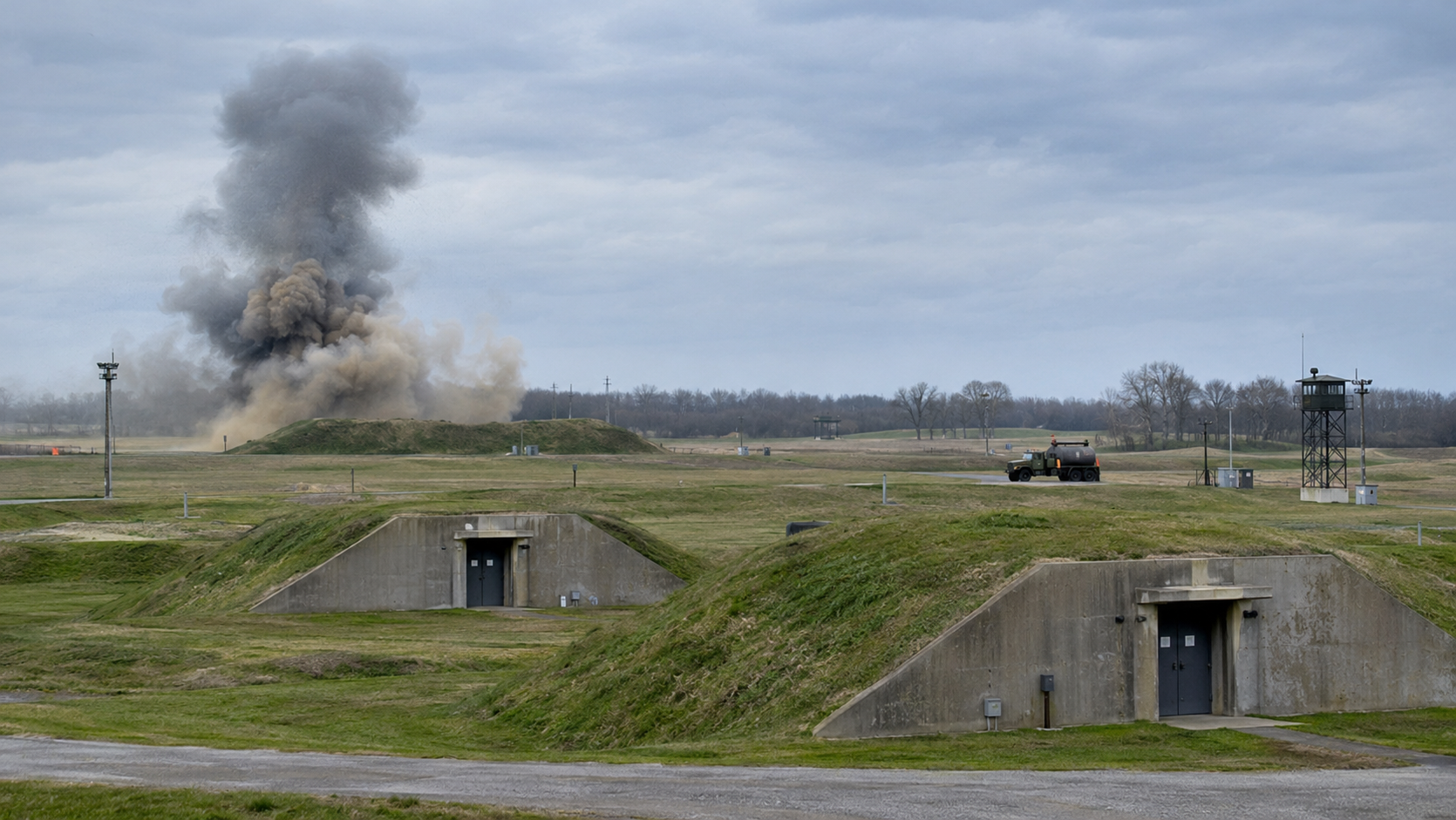
The United States Army has rescheduled the controlled destruction of a deteriorating stockpile of shock-sensitive explosives at the Iowa Army Ammunition Plant to Wednesday, November 25. Officials stated the delay allows for optimal weather conditions and complete safety mitigation preparations at the site.
The planned operation involves two controlled detonations of 68 drums containing roughly 9,700 pounds of degraded lead azide. The material, stored in bunkers for two decades, has recrystallised due to evaporating stabilizing liquids, making it dangerously sensitive to friction and shock. Federal officials, alongside the FBI and the Bureau of Alcohol, Tobacco, Firearms and Explosives, determined that even opening the drums could trigger an accidental incident.
With local temperatures forecast to drop below freezing, federal lawyers argued that delay increases the risk of an uncontrolled detonation. The operation has nevertheless drawn intense pushback from residents and elected leaders across Iowa, Illinois, and Missouri over fears of airborne lead dust. Lead is a potent neurotoxin that poses severe health hazards, especially to children and pregnant women.
Legal proceedings continue before the US Court of Appeals for the Eighth Circuit, which recently issued a temporary stay on the emergency permit granted by the Environmental Protection Agency. However, the Justice Department notified the court that the military intends to proceed under a separate emergency exemption, asserting that the court order paused only the EPA permit and did not halt the Army itself. Environmental attorneys representing the Iowa Environmental Council and Sierra Club have condemned the manoeuvre as bypassing judicial review.
To contain the environmental fallout, the Army has arranged two-storey sand barriers, water mist systems, and saturated soil covers. Plume modelling indicates lead particles could travel across several counties depending on wind conditions. Officials have advised nearby residents to stay indoors, close windows, and follow subsequent decontamination procedures once the operation concludes.
TTV News follows a published editorial policy. Spotted an error? Request a correction.
Related
Russian Cargo Ship Burns Off Finland Coast After Drone Strike
Finnish authorities monitor sanctioned vessel Sparta II after crew evacuated in Baltic Sea

Three People Lose Lives and 36 Missing in Indonesia Sweets Factory Fire
Emergency crews battle blaze at Fonusa Agung Mulia facility in Banten province as search operations continue

11 Nations Begin Military Exercise in Poland to Prepare for Ukraine’s Post-War Security
Warsaw: The UK- and France-led Coalition of the Willing has begun its first major multinational military exercise in Poland, bringing toget…