Bengaluru: Severe drought conditions in Karnataka's Dharwad district have left farmers struggling with acute shortages of fodder and water, forcing some to sell cattle they have raised for years.
The failure of the southwest monsoon has affected agricultural activity across several areas and created uncertainty over the upcoming rabi season. With limited rainfall, farmers are finding it difficult to prepare their fields for the next crop, while reduced agricultural output has also affected the availability of fodder.
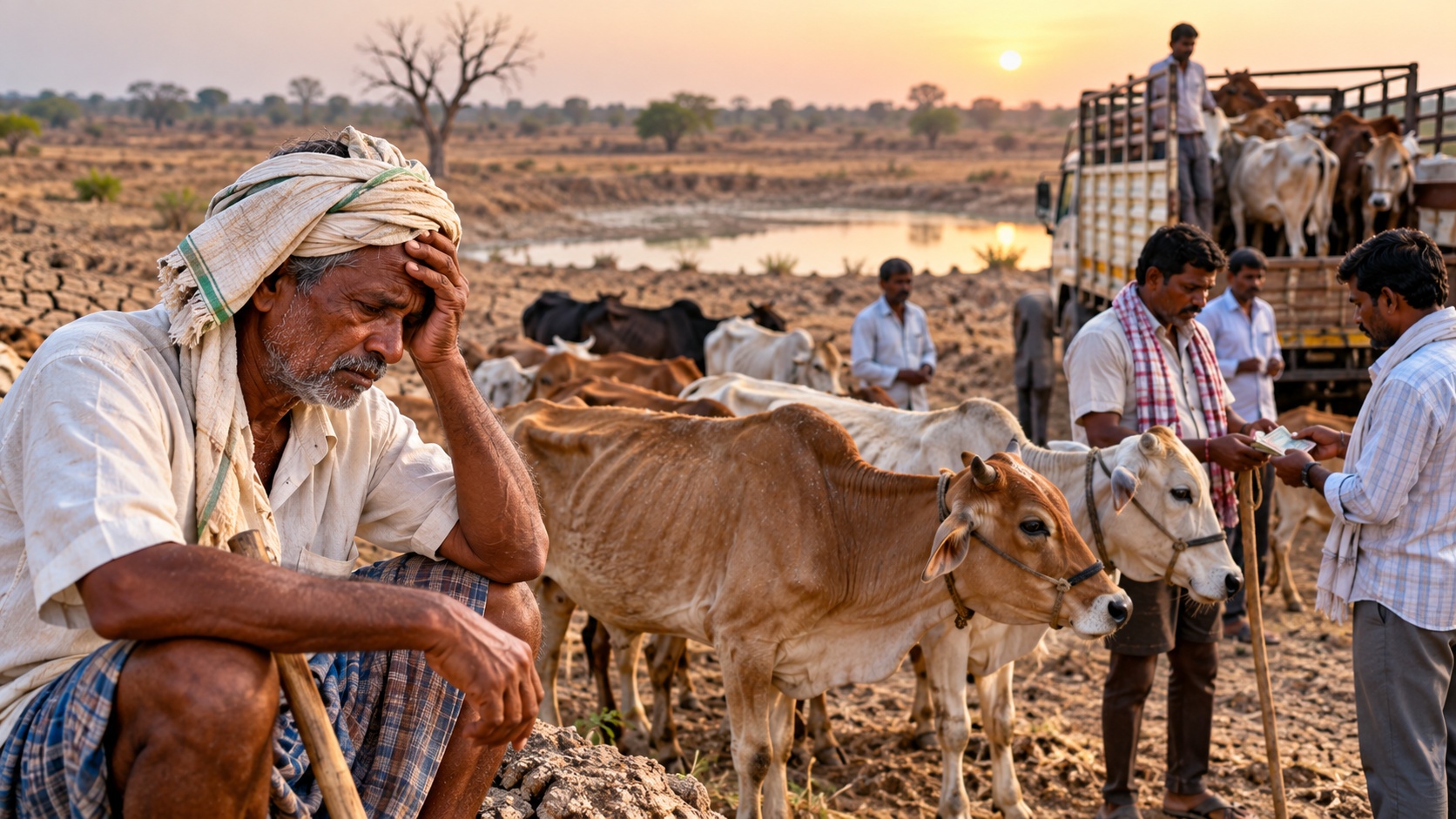
The cattle market at Nulvi in Kundgol taluk has reportedly witnessed a rise in distress sales, with the number of farmers bringing animals for sale exceeding the number of buyers. Farmers from Kundgol, Navalgund and Annigeri are reportedly reaching the market as the cost of maintaining livestock becomes increasingly difficult to manage.
Many farming households traditionally keep bullocks for agricultural work and cows and buffaloes for dairy activities. Livestock are an important source of income for these families, but the crop losses have reduced the availability of agricultural residue used as cattle feed.
Several farmers are now retaining only one or two animals and selling the remaining cattle. Farmers claim that the shortage of buyers has caused prices to fall sharply. According to them, cattle valued at around Rs 1 lakh under normal market conditions are sometimes being offered for only Rs 5,000 to Rs 6,000.
Farmers Struggle to Afford Fodder
Farmer Hemanagouda said the cost of arranging fodder had become a major burden for drought-hit households.
Farmers said they could manage their own food requirements to some extent but were finding it increasingly difficult to purchase sufficient fodder for their animals. Some said they were being forced to sell livestock at low prices because keeping cattle without adequate food and water was becoming unsustainable.
Farmers have urged the government to establish fodder banks and goshalas in drought-affected areas. They said such facilities could provide temporary shelter and feed for livestock while helping prevent distress sales.
Farmers have called for immediate intervention to protect cattle, which continue to play an important role in agricultural activities and household incomes across rural areas affected by the drought.


.jpg)