
Dubai: Crude oil exports from the Middle East rose above pre-war levels on four of the seven days in the final week of September, according to provisional data from ship-tracking firm Kpler, despite continued tensions around the Strait of Hormuz.
Kpler data showed regional crude exports exceeded pre-war levels on September 24 and from September 27 to 29, reaching between 19.5 million and 22.5 million barrels per day (bpd).
Before the US-Israel war with Iran began, crude exports through the region averaged around 18 million bpd between March 2025 and February 2026.
However, senior Islamic Revolutionary Guard Corps (IRGC) commander Ali Fadavi said in a televised interview on Sunday that only around 3 million to 4 million barrels of oil were currently moving through the Strait of Hormuz. He described the volume as negligible compared with pre-war traffic.
Fadavi also claimed that no US vessels were currently present in the Gulf, the Strait of Hormuz, the Sea of Oman or the northern Indian Ocean. He said US warships remained vulnerable to potential IRGC attacks.
Hormuz Oil Flows Show Recovery
According to Kpler, the seven-day average for crude exports stood at 18.5 million bpd on October 1. The figure includes shipments through the Strait of Hormuz and the Red Sea, exports from terminals and ship-to-ship transfers in the Gulf of Oman.
The broader seven-day average covering crude oil, petroleum products, chemicals and non-gas liquids was 22.4 million bpd in the period ending September 30.
The data also showed that liquefied natural gas cargoes leaving the Strait of Hormuz increased in September to their highest monthly level since February.
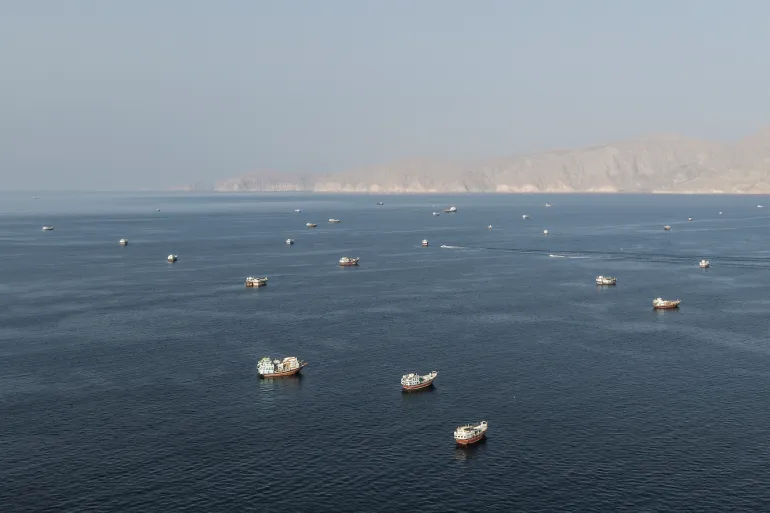
The Strait of Hormuz is a major route for global energy shipments, connecting the Persian Gulf with the Gulf of Oman and the Arabian Sea. Disruptions in the waterway can affect crude oil, petroleum products and LNG supplies.
Kpler cautioned that its figures do not include vessels that may have passed through the strait with their automatic identification system (AIS) transponders switched off to avoid detection.
The latest figures indicate that while tensions around the waterway remain high, tracked oil flows recovered to or above pre-war levels on several days towards the end of September.