Hyderabad: Videos of police personnel participating in religious celebrations have triggered a wider debate over how religious expression is treated when officers are in uniform or performing official duties.
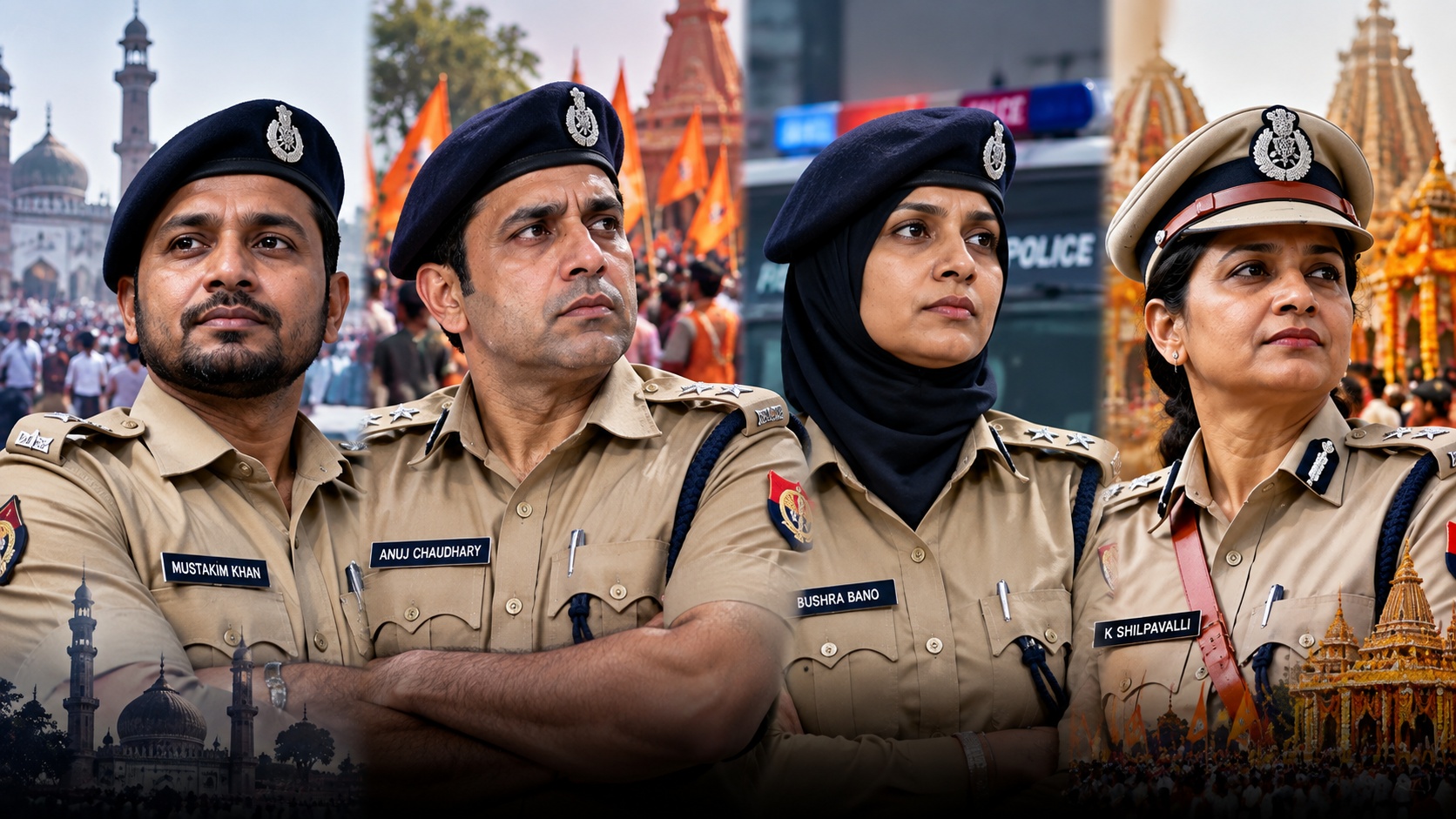
The discussion has gained attention following contrasting cases involving police officers from different states, including Bihar Sub-Inspector Mustakim Khan, Uttar Pradesh officer Anuj Chaudhary, West Bengal IPS officer Bushra Bano and Hyderabad police officials seen during the Khairatabad Ganesh immersion procession.
Mustakim Khan and Anuj Chaudhary cases
In June 2026, Bihar Police Sub-Inspector Mustakim Khan, posted at Kanti police station in Muzaffarpur, was served a show-cause notice after a video showed him participating in a Muharram procession while in uniform and holding a sword.
Muzaffarpur SSP Kantesh Kumar Mishra said Khan was sent to the police lines following the incident. Reports said departmental proceedings were initiated over his conduct during the procession.
A contrasting case cited in the debate involves Anuj Chaudhary, who was serving as a Circle Officer in Uttar Pradesh's Sambhal district when a video surfaced in January 2025 showing him carrying a mace during a Gada Yatra procession while in uniform.
According to reports, Chaudhary did not receive a show-cause notice or face departmental proceedings over the incident. His subsequent transfer from Sambhal to Chandausi was reported as a routine departmental transfer rather than disciplinary action. However, the two incidents occurred in different states, at different times and involved officers of different ranks, making direct comparisons subject to those differences.
Hyderabad police videos during Ganesh immersion
The debate has also emerged after videos from Hyderabad's Khairatabad Ganesh immersion procession showed police personnel joining devotees in celebrations.
Khairatabad DCP K Shilpavalli was seen briefly dancing with devotees during the procession at NTR Marg on September 25. The footage emerged as police personnel were deployed across the city for crowd management, traffic control and security arrangements.
Other videos circulating online showed senior police personnel participating in the festive atmosphere during the immersion procession.
The footage has prompted comparisons on social media with cases in which officers faced scrutiny for participating in religious events while in uniform.
Bushra Bano transfer triggers separate debate
In West Bengal, IPS officer Bushra Bano was transferred from her post as Additional Superintendent of Police in Kharagpur to Deputy Commandant of the State Armed Police after a September 13 video in which she discussed her journey to the civil services.
In the video, Bano used Islamic expressions including “Assalamualaikum”, “Inshallah” and “Jazakallah”. The video drew criticism from some social media users and the organisation Hindu Legal Fund, which said it had complained to the West Bengal Home Secretary over the officer's choice of expressions.
The West Bengal government's transfer order cited “public interest” and did not publicly state that the video was the reason for the transfer. The timing of the transfer, however, led to political and public debate over whether the two developments were connected.
Questions over consistency
The cases have led to questions about how police conduct rules should apply when officers participate in religious activities while wearing uniform or while performing official duties.
The issue is not whether police personnel can hold personal religious beliefs, but how departments distinguish between private faith, public religious expression and conduct expected from officers while on duty.
The contrasting incidents involving Khan and Chaudhary have been cited by commentators as an example of differing departmental responses. At the same time, differences in rank, jurisdiction, circumstances and the applicable departmental procedures need to be considered before drawing conclusions about whether the cases were treated differently because of religion.
The controversy involving Bano has added another dimension to the discussion, with critics questioning whether religious expressions used by serving officers in public communication should be treated differently depending on the faith associated with them. The government, however, has not publicly stated that her transfer was ordered as disciplinary action over the video.
The broader question remains how police departments can maintain a consistent standard of neutrality and professional conduct while respecting officers' individual freedom of faith and expression.



.jpg)