
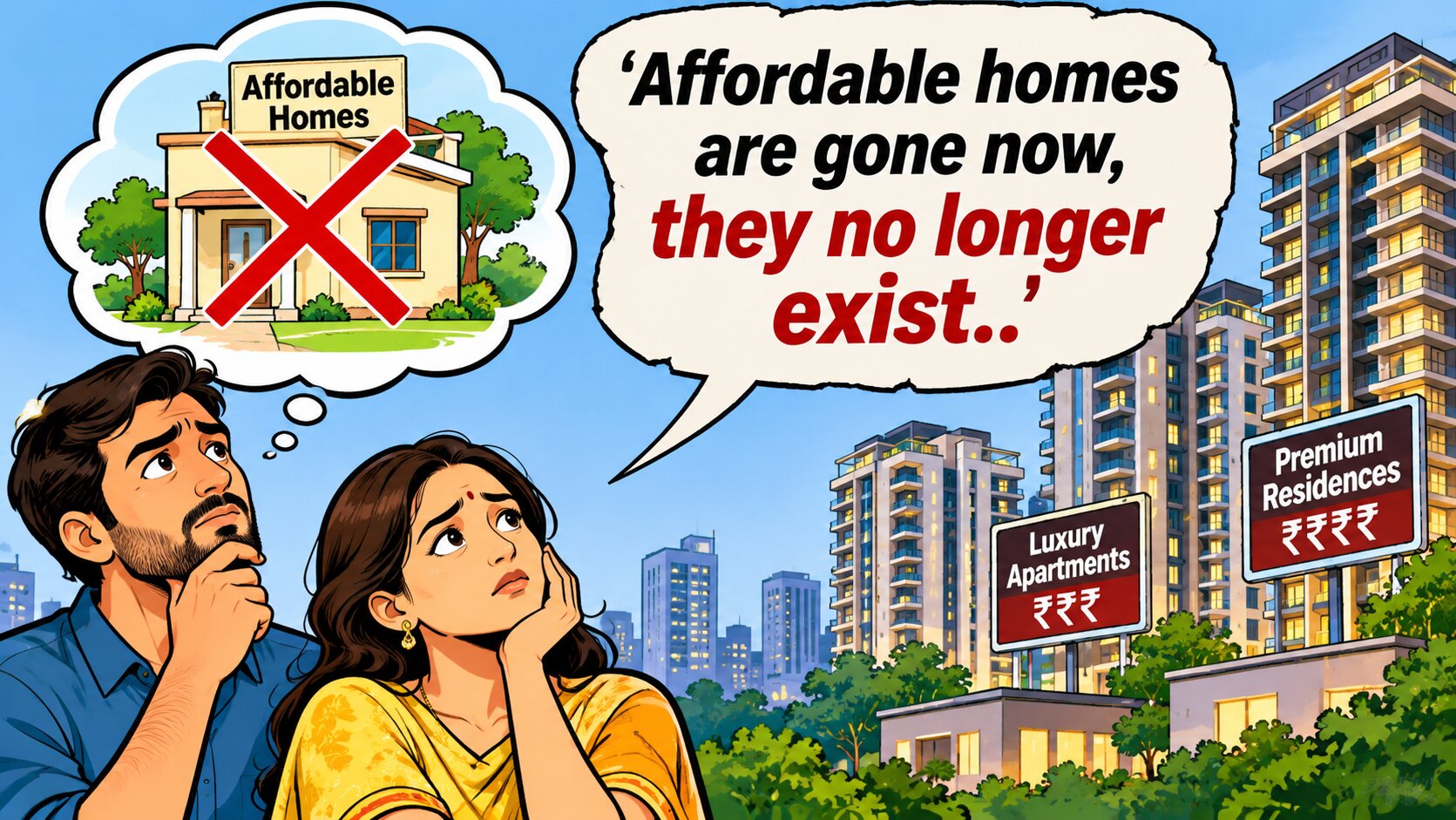
Mumbai: Affordable housing is becoming increasingly difficult to access in India as rising land prices, construction expenses and government charges push residential property beyond the reach of many ordinary buyers, real estate tycoon Niranjan Hiranandani has warned.
In an interview, Hiranandani said the housing sector was facing a serious challenge, with homes priced below Rs 50 lakh becoming increasingly difficult to find in major cities. He cautioned that the situation could deteriorate further unless governments introduce policy measures to reduce the cost of housing development.
According to Hiranandani, the combined expense of land acquisition, construction, infrastructure development and statutory charges leaves developers with limited scope to offer homes at affordable prices.
Affordable Housing Supply Declines
The changing composition of India's housing market reflects the growing affordability challenge.
According to figures cited from the Economic Survey 2025-26, homes priced below Rs 50 lakh accounted for only 17 per cent of new housing supply across India's eight largest cities in 2025. The corresponding share stood at 52.4 per cent in 2018.
The decline points to a significant shift towards higher-priced residential properties, making it increasingly difficult for middle- and lower-income households to purchase homes in major urban centres.
Government Charges Add to Property Costs
Hiranandani identified government levies as one of the major contributors to rising housing prices. He referred to stamp duty, labour cess and other development-related charges that developers must account for while pricing residential projects.
Explaining the impact of these expenses, he said that when a property is sold in Mumbai for Rs 40,000 per square foot, around Rs 20,000 goes to the government through various charges and costs.
He clarified that his comments referred to official payments rather than unofficial expenses, arguing that the burden ultimately affects the price paid by homebuyers.
However, he acknowledged that reducing these charges could be difficult because governments depend on property-related revenue to finance infrastructure projects, including roads and metro networks.
Housing Could Become More Expensive
The real estate industry leader warned that rising land prices, regulatory expenses and inflationary pressures could further increase the cost of residential properties.
He also pointed to the impact of global economic developments, including inflationary pressures linked to US President Donald Trump's policies, as another factor that could add to costs.
Hiranandani predicted that housing affordability could worsen over the next few years if the current trend continues.
Calls for Urgent Policy Intervention
Hiranandani also criticised the tendency to place the entire responsibility for expensive housing on property developers. He argued that the problem involves several factors, including land prices, government levies and the broader cost of development.
He called for coordinated action involving governments, financial institutions and private developers to address the affordability challenge.
According to him, the government needs to find a solution quickly, as the shortage of reasonably priced homes could eventually become a wider economic and social concern.
The declining availability of lower-cost housing has renewed questions about how India can expand home ownership while balancing infrastructure funding, development costs and the needs of ordinary buyers.