
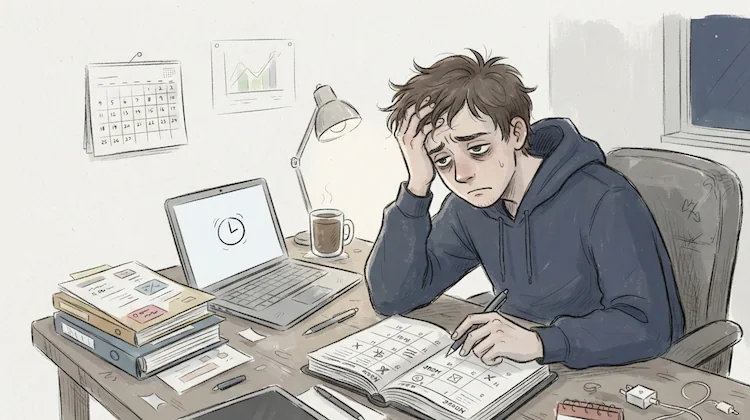
The weekend is generally seen as a time for employees to catch up on sleep, spend time with friends and family, pursue hobbies and take a break from professional responsibilities. However, for many working professionals, the feeling of relaxation begins to disappear before Monday arrives.
An unfinished presentation, an approaching deadline, a difficult conversation with a manager or the thought of returning to a demanding work schedule can trigger anxiety on Sunday.
This experience is commonly known as the 'Sunday scaries' or Sunday anxiety. It is not always about disliking Mondays. In many cases, it reflects the difficulty employees face in mentally disconnecting from work even after office hours have ended.
Why Does Sunday Anxiety Begin Before Monday?
A September 2026 study published in Frontiers in Psychology, titled The Sunday Blues: A Qualitative Exploration of Manifestations, Contributing Factors, and Coping Strategies Among Employees, examined the experiences of 26 employees in the Netherlands.
Researchers found that Sunday anxiety involved more than sadness about the weekend ending. Participants reported feelings of stress, anxiety, fatigue, repetitive worrying, procrastination and social withdrawal.
The study identified several factors that could contribute to these feelings, including anticipated workplace challenges, unfinished responsibilities, job insecurity and difficulties balancing professional and personal life.
These findings suggest that employees can experience work-related stress even before the working week begins.
When Work Follows Employees Home
One major reason weekends may fail to provide adequate recovery is the growing difficulty of mentally switching off from professional responsibilities.
A 2014 study published in the Journal of Occupational Health Psychology, involving 60 full-time employees, examined the relationship between workplace-related social stress and psychological detachment.
Researchers Diana Pereira and Achim Elfering found that continued workplace-related stress was associated with poorer psychological detachment on Sunday evening and poorer sleep that night.
The study also found that psychological detachment partly explained the relationship between workplace stress and certain sleep indicators.
The issue is particularly relevant in workplaces where employees continue receiving emails, messages and phone calls after office hours.
Weekend emails, after-hours communication and expectations of constant availability can blur the boundaries between professional and personal life. Digital notifications may also make it harder for employees to stop thinking about work.
It Is More Than Just Monday Blues
The level of psychological recovery employees experience during weekends can vary considerably.
A February 2026 study published in the Journal of Occupational Health Psychology, titled Trajectories of Psychological Detachment Over the Weekend, followed 153 employees across multiple weekends.
Researchers identified three patterns of weekend recovery:
49 per cent: Employees experienced consistently high or increasing psychological detachment.
35 per cent: Employees showed a moderate level of detachment.
16 per cent: Employees consistently experienced low psychological detachment.
The researchers also examined how these patterns related to fatigue, sleep impairment and employee engagement at the beginning of the following week.
The findings highlight that employees do not experience the same level of mental recovery during weekends. Some are better able to leave work-related concerns behind, while others continue carrying workplace stress into their personal time.
How Can Employees Make Sundays Less Stressful?
Reducing Sunday anxiety does not necessarily mean spending the entire day preparing for Monday. Instead, employees can introduce small changes that create a healthier separation between work and personal life.
Some practical steps include:
Plan ahead on Friday: List important priorities and pending tasks before signing off for the weekend.
Limit work notifications: Avoid checking unnecessary work emails and messages during personal time.
Maintain a relaxing routine: Make time for hobbies, exercise, family activities or other enjoyable experiences.
Prepare for Monday gradually: Break large assignments into smaller, manageable tasks instead of worrying about the entire workload.
Protect personal time: Set clear boundaries around after-hours communication whenever possible.
The concept of 'Bare Minimum Mondays' has also gained attention as an approach to reducing the pressure of returning to work. It encourages employees to focus on essential priorities at the beginning of the week rather than attempting to complete everything immediately.
Why Employers Also Need to Take Responsibility
Individual coping strategies may help, but they cannot fully address stress caused by unhealthy workplace practices.
Employers also have a role in creating working environments that allow employees to recover outside office hours. Realistic deadlines, manageable workloads, respect for personal time and fewer expectations of constant availability can help improve employee well-being.
Sunday anxiety may appear to be a routine feeling associated with the end of the weekend. However, when it repeatedly affects sleep, relationships and everyday functioning, it deserves attention.
A weekend should provide employees with an opportunity to recover from work, not leave them counting down the hours until Monday morning.