
Hyderabad: Telangana's planned restrictions on drilling new borewells for construction and other non-drinking-water purposes from November 1 have triggered concerns across Hyderabad's construction sector. Builders fear higher project costs and delays, while daily wage workers and borewell rig operators worry about their livelihoods and financial commitments.
The restrictions form part of the state government's contingency measures to address a potential water crisis linked to El Niño conditions. Under the proposed arrangements, new borewells would be permitted only for drinking-water requirements, subject to existing regulations. Deepening existing borewells would also be allowed exclusively for drinking water.
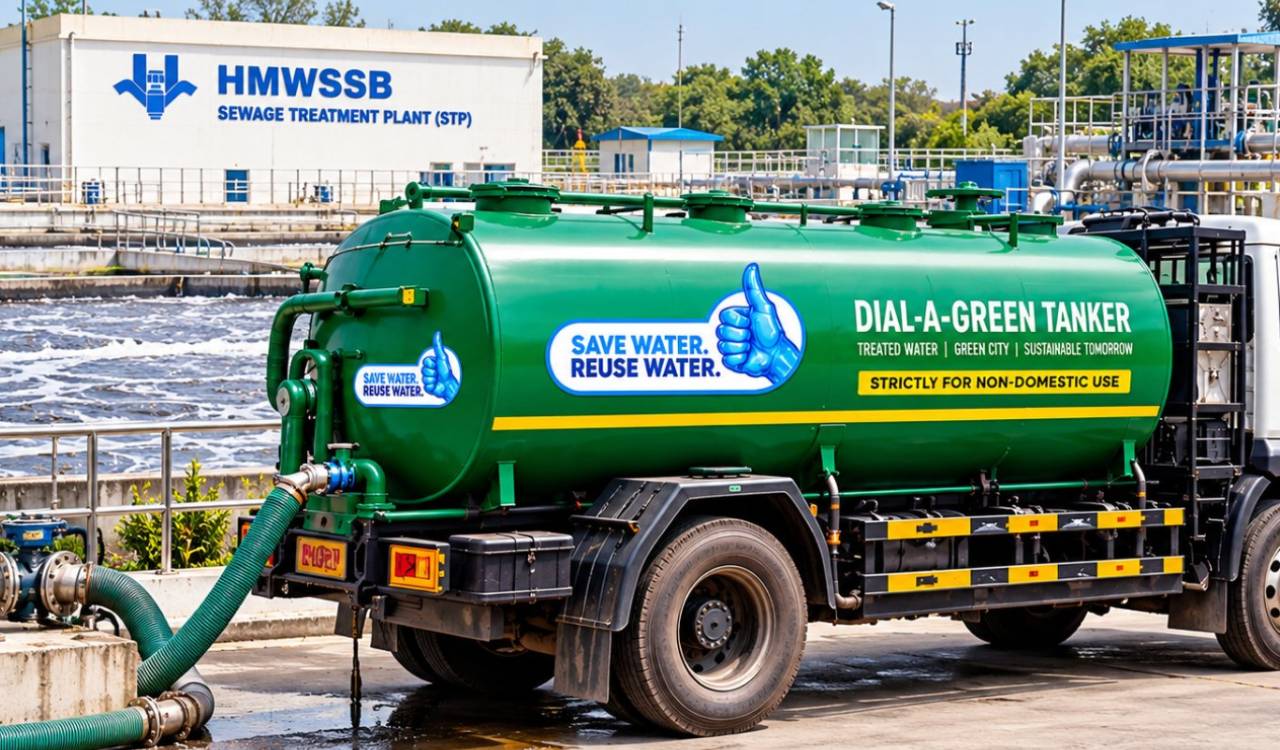
From November 1, treated water from sewage treatment plants (STPs) is expected to be supplied to construction sites through designated green water tankers.
Builders Warn of Higher Construction Costs
Builders, particularly those working on conventional apartments and individual houses, have raised questions about whether sufficient treated water will be available to meet construction requirements.
A member of the Telangana Builders Federation (TBF) said transporting treated water from the Ramanthapur plant to construction sites could significantly increase expenditure. The representative also raised concerns about its suitability for construction and called for clarity on technical requirements.
According to the TBF member, interruptions in water supply could delay project schedules and increase costs by an estimated 2–3 per cent. The impact would depend on the size of the project and the duration of any disruption.
Builders have warned that they cannot immediately reduce their workforce when water supplies become uncertain because workers and project schedules must still be managed. The federation member said the matter would be taken up with the government.
Daily Wage Workers Fear Loss of Income
Construction workers are concerned that a slowdown could affect their daily earnings.
According to the report, skilled workers earn around Rs 1,000 to Rs 1,500 a day, while semi-skilled workers receive approximately Rs 400 to Rs 500. Since many are employed on a daily-wage basis, interruptions in construction could quickly affect household incomes.
Narasimha, a construction worker in Yousufguda, said workers who had migrated to Hyderabad for employment could struggle to meet their daily expenses if projects were delayed or employers reduced their workforce.
Workers fear that a prolonged slowdown could force some to return to their native villages or seek employment in other states.
Borewell Rig Operators Face Loan Repayment Concerns
Borewell drilling companies have also expressed concern about the restrictions. Although official figures are unavailable, the Greater Hyderabad Rig Owners Association estimates that around 250 borewell operating firms work in the region.
According to the association, each drilling truck supports approximately eight workers. Operators must also cover maintenance expenses, employee salaries and bank loan instalments.
A borewell drilling truck can cost between Rs 1.5 crore and Rs 2 crore, depending on its size, with many operators relying on bank financing to purchase the equipment.
Association members fear that a prolonged suspension of drilling work could make it difficult to repay loans and increase the risk of vehicles being repossessed. Some operators are considering moving their businesses to Karnataka, Maharashtra and Andhra Pradesh if work in Hyderabad declines.
The association has reportedly raised the issue with Rajya Sabha MP Vem Narender Reddy and other Congress leaders. It has called for strict action against unauthorised drilling while seeking exemptions for genuine requirements at construction sites.
High-Rise Projects Raise Concerns Over Workers' Water Supply
Builders involved in high-rise developments have highlighted the challenge of providing water to workers living in temporary accommodation at construction sites.
Industry representatives say that even if treated water can meet certain construction needs, separate arrangements may be required for workers' domestic water consumption.
A member of CREDAI Hyderabad said inadequate water supplies to workers' quarters could prompt migrant labourers to leave construction sites, potentially delaying projects and affecting commitments to customers and lenders.
The report estimates that between 15 lakh and 20 lakh migrant workers, including civil workers, electricians and plumbers, are engaged at construction sites. This estimate should be independently verified before publication.
Government Contingency Measures
The restrictions come amid preparations for possible water and electricity shortages in the coming months. Chief Secretary Sanjay Jaju has directed officials to prepare detailed contingency plans, according to the report.
Government offices have also been instructed to conserve electricity, including limiting the use of air conditioners and reducing their operation after 6 pm.
Officials have said alternative water sources are being used to supplement supplies following the unavailability of water from the Manjeera and Singur reservoirs. These include 60 million gallons per day (MGD) from Mission Bhagiratha, alongside supplies from the Krishna River and other sources.
Special Chief Secretary Jayesh Ranjan said borewell permissions in Hyderabad should be restricted to drinking-water needs, subject to existing regulations.
With the restrictions scheduled to begin on November 1, builders, workers and rig operators are seeking clear implementation guidelines and alternative water arrangements to limit disruption to construction activity.
Editorial note: Before publication, verify the latest government order, its effective date, the availability and permitted use of treated water, and the reported figures for construction workers and borewell operators. The estimated cost increase of 2–3 per cent reflects an industry representative's assessment, not an independently established sector-wide figure.